
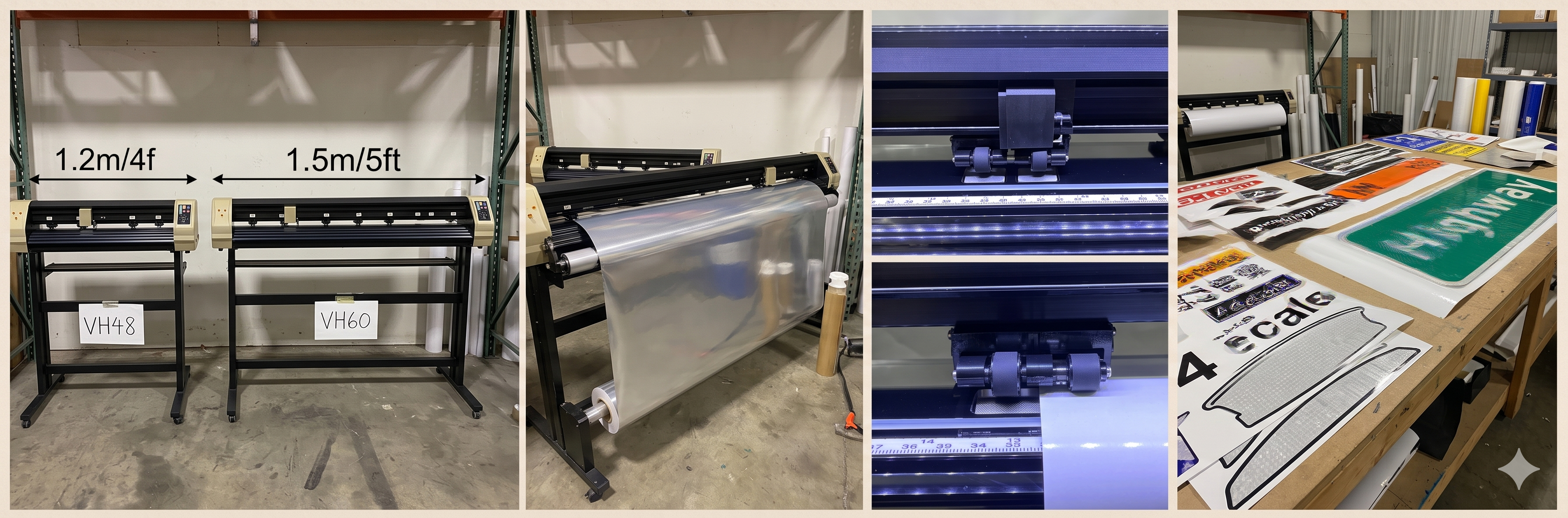
VH48 or VH60 — which one should you buy?
Both machines cut vinyl, stickers, and skins with the same blade system and the same quality. The real difference is cutting width: the VH48 is the compact machine for stickers, labels, and mobile skins, while the VH60 handles wider stock — bigger sticker sheets, HTV layouts, and longer vinyl runs. Buy the VH48 for a counter or startup, and the VH60 when wider media or higher daily volume is part of your plan.
| Your work | Right machine |
|---|---|
| Mobile skins, phone-size stickers, labels, small decals | VH48 |
| Sticker sheets, HTV names and numbers, wider decals | VH60 |
| Longer vinyl runs and growing daily volume | VH60 |
| Lowest investment, smallest counter space | VH48 |
VH48 — compact
Stickers, skins, and labels at the lowest cost.
VH60 — wider
Same quality, wider media, more room to grow.
VH48 Cutting Plotter — built for stickers and skins
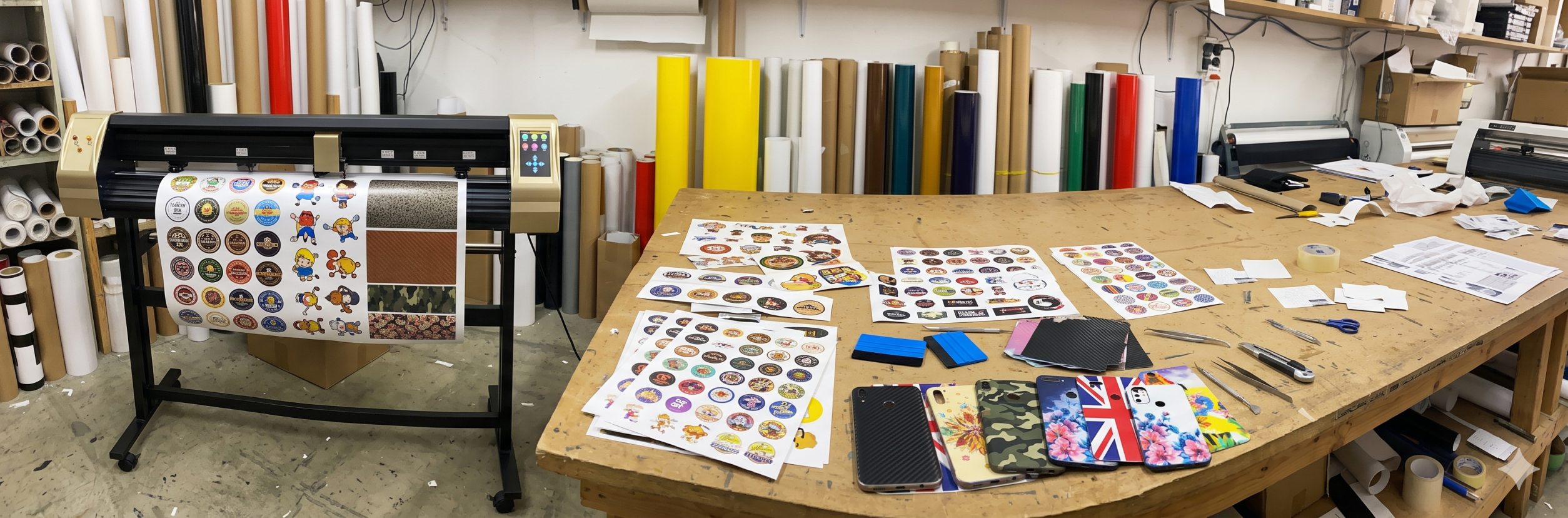
What the VH48 does best
The VH48 is the entry point of the range — a compact cutting plotter sized for shop counters, home startups, and mobile accessory desks. Its cutting width covers the jobs that make up most small-shop demand: mobile back skins, phone-size sticker die-cuts, product labels, and small decals.
- Compact footprint — fits where bigger plotters cannot
- Covers mobile skins and everyday sticker work completely
- Lowest price in the range — fastest machine to pay back
- Same blade system and software workflow as the VH60
- Simple to learn — staff cut their first job the same day
Where it stops: media wider than its cutting width — full A3-plus sheets laid wide, larger HTV layouts, and long banner strips need the VH60. Everything inside its width, the VH48 cuts identically well.
Best for: mobile skin businesses, sticker counters, and first-machine buyers on a budget.
VH60 Cutting Plotter — wider media, room to grow
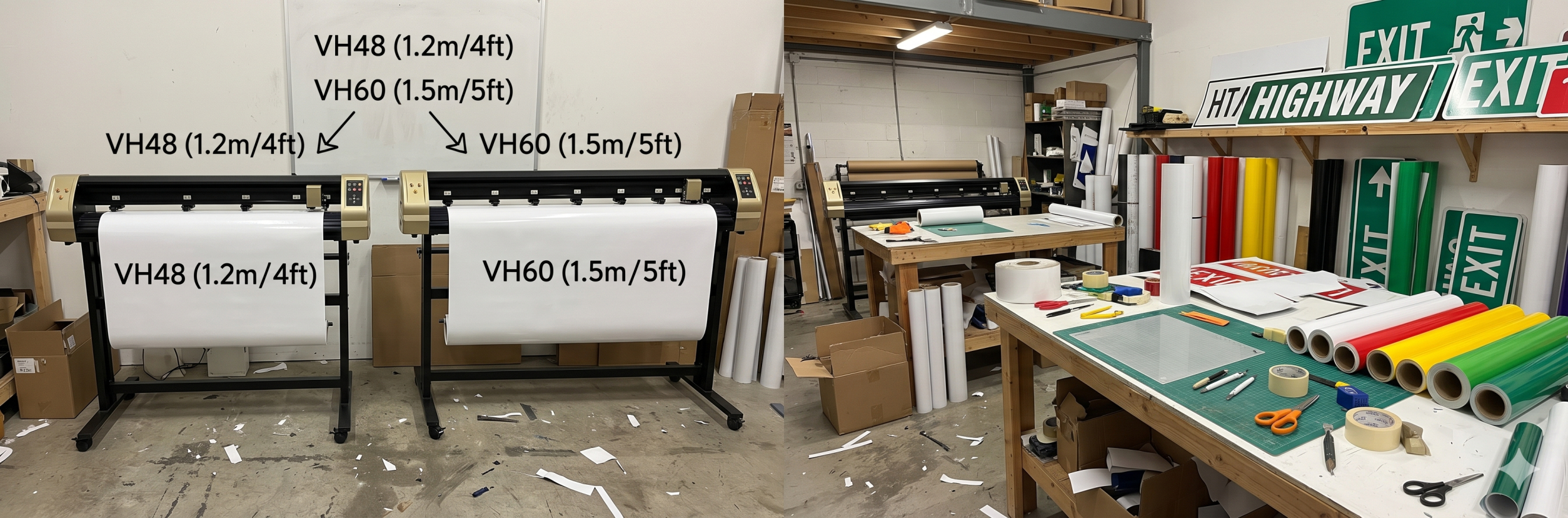
What the VH60 does best
The VH60 carries the same cutting quality into a wider bed. It does everything the VH48 does, plus the jobs that need extra width: larger sticker sheets in one pass, multi-up HTV layouts for uniforms, wider decals, and longer continuous vinyl runs.
- Wider cutting width — fewer trims, fewer multi-piece jobs
- Multi-up nesting on bigger sheets saves material every day
- Handles growing volume without turning jobs away
- Same blades, strips, and software as the VH48 — shared spares
- Slightly larger footprint and price — still counter-friendly
The honest trade-off: if your work never exceeds the VH48's width, the extra width sits unused. If it does — even occasionally — the VH60 saves trimming time and material from week one.
Best for: sticker shops, HTV and garment work, and buyers planning to grow.
VH48 vs VH60 — side by side
| Feature | VH48 | VH60 |
|---|---|---|
| Cutting width | ~48 cm class | ~60 cm class |
| Mobile skins | Yes | Yes |
| Stickers and labels | Yes | Yes, wider sheets |
| HTV layouts | Single-up, smaller | Multi-up |
| Wider decals and sheets | Needs trimming | One pass |
| Footprint | Smallest | Slightly larger |
| Price | Lower | Higher |
| Best for | Skins, labels, startups | Sticker shops, HTV, growth |
Confirm exact widths, force, and speed figures against the official datasheet before publishing or quoting.
What is the same in both machines
The VH48 and VH60 are siblings, not rivals. These things are shared, which makes owning either one simple.
| Shared feature | Why it matters |
|---|---|
| Blade system (45° / 60°, standard holder) | Same blades, holders, and replacement habit on both |
| Cutting strips and pinch rollers | One spares list serves either machine |
| Software workflow and drivers | Learn once — the file-to-cut process is identical |
| Cut quality and precision | Same sharp small text and clean corners on both |
| Material range (vinyl, HTV, sticker stock, skins) | Both cut the same media inside their width |
This is why the decision comes down to one question only: how wide is the media you actually run?
Who should buy the VH48 — and who should buy the VH60
| Buy the VH48 if... | Buy the VH60 if... |
|---|---|
| You cut mobile skins, labels, and phone-size stickers | You cut sticker sheets wider than the VH48's width |
| Counter space is tight | You run HTV names and numbers in batches |
| Budget is the deciding factor | Daily volume is growing month on month |
| It is your first cutting machine | You already turn away wider jobs |
| Your widest regular media fits inside 48 cm | Your widest regular media does not fit the VH48 |
The single deciding exercise: write down your last twenty jobs and measure the widest material each one needed. If everything fits the VH48, buy it with confidence. If three or more jobs needed more width, the VH60 has already paid for its difference.
What to check before you buy either machine
- Exact cutting width against your real media — measure your sheets and rolls, do not guess
- Cutting force headroom for your thickest regular material — test cut it at the demo
- Software included, with drivers for your PC — confirm a live cut before payment
- Blades, cutting strips, and pinch rollers stocked locally — wear parts decide uptime
- Contour or registration support if printed sticker work is in your plan
- Warranty and someone who answers the phone after the sale
A simple start: either machine plus two spare blades, one spare strip, and your most-used vinyl roll covers the first month of real work without a single waiting day.
How to decide between VH48 and VH60
- List your jobs. Write down what you cut today and what you plan to offer in six months.
- Measure your media. The widest sheet or roll you run regularly is the spec that decides everything.
- Match the width. If it all fits the VH48, buy the VH48. If anything does not, buy the VH60.
- Check the demo. Cut your own file and your own material on both machines at the demo — feel the difference yourself.
- Count the extras. Blades, strips, and software in the package matter as much as the machine price.
- Plan for growth. If new services like HTV or banner strips are six months away, buying the VH60 now avoids a second purchase.
- Buy from support. Setup help, spares in stock, and a reachable technician decide your daily uptime more than any spec sheet.