
Which Seiko printhead do you need?
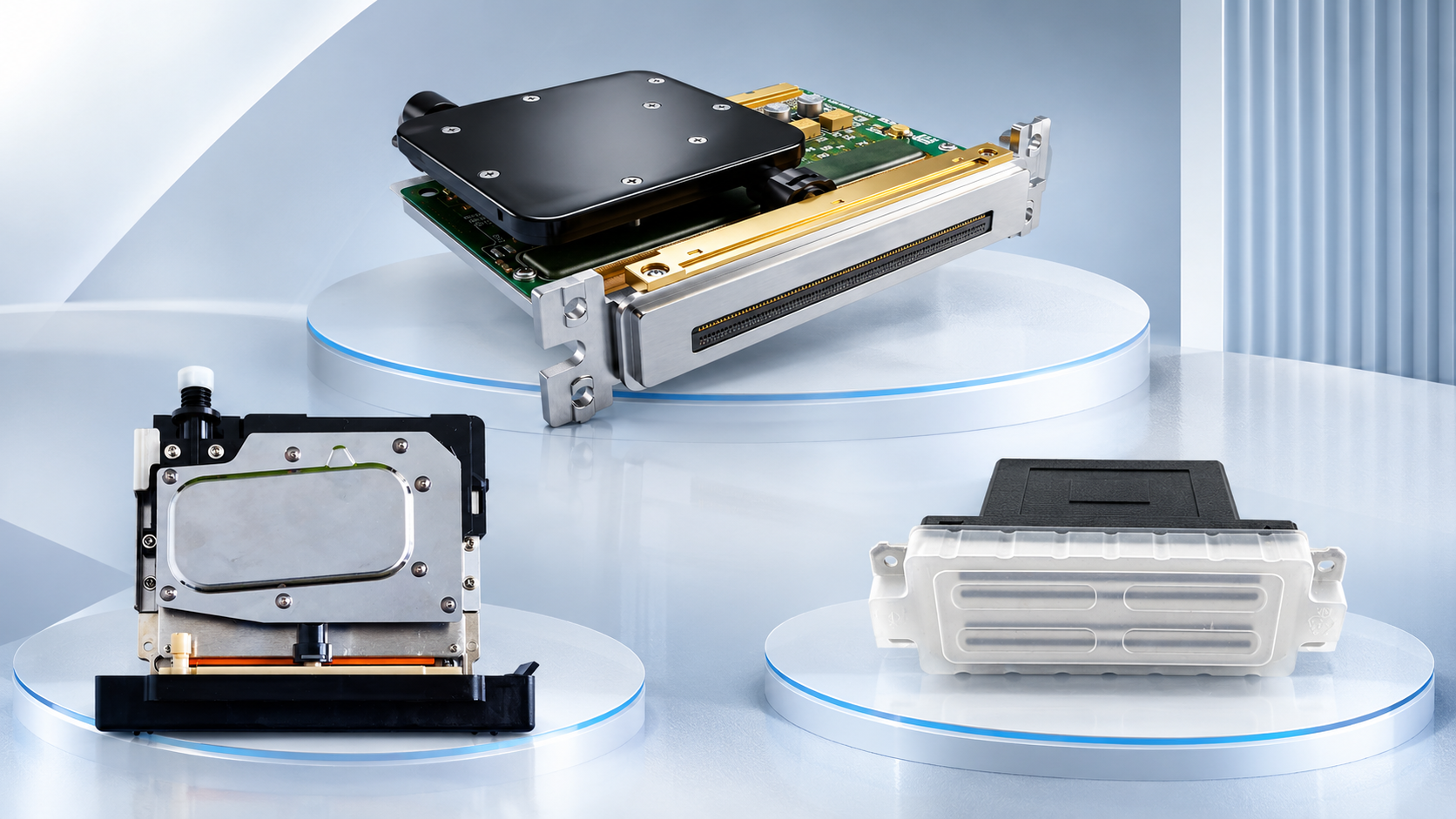
Seiko SPT heads share the same rule as Konica: they are built for true solvent ink, which is why flex and wide solvent machines use them. The Seiko SPT-510 is the well-known workhorse with a 42 pL drop, the SPT-508 and its 12 pL GS version handle finer work, and the SPT-1024 runs production machines with double the nozzles. Match the head model, drop size, and your machine's board before you order.
| Your machine and work | Right Seiko head |
|---|---|
| Standard solvent and flex machines, dense banner output | Seiko SPT-510 (42 pL) |
| Finer detail solvent printing, smoother gradients | Seiko SPT-508 (35 pL) or 508GS / 510GS (12 pL) |
| Production solvent machines, high-speed output | Seiko SPT-1024 (M / L / HG) |
| Older legacy solvent machines still running | Seiko SPT-255 (35 pL) |
SPT-510
The 42 pL solvent workhorse.
SPT-1024
Production speed, 1024 nozzles.
SPT-508 & 255
Finer drops and legacy machines.
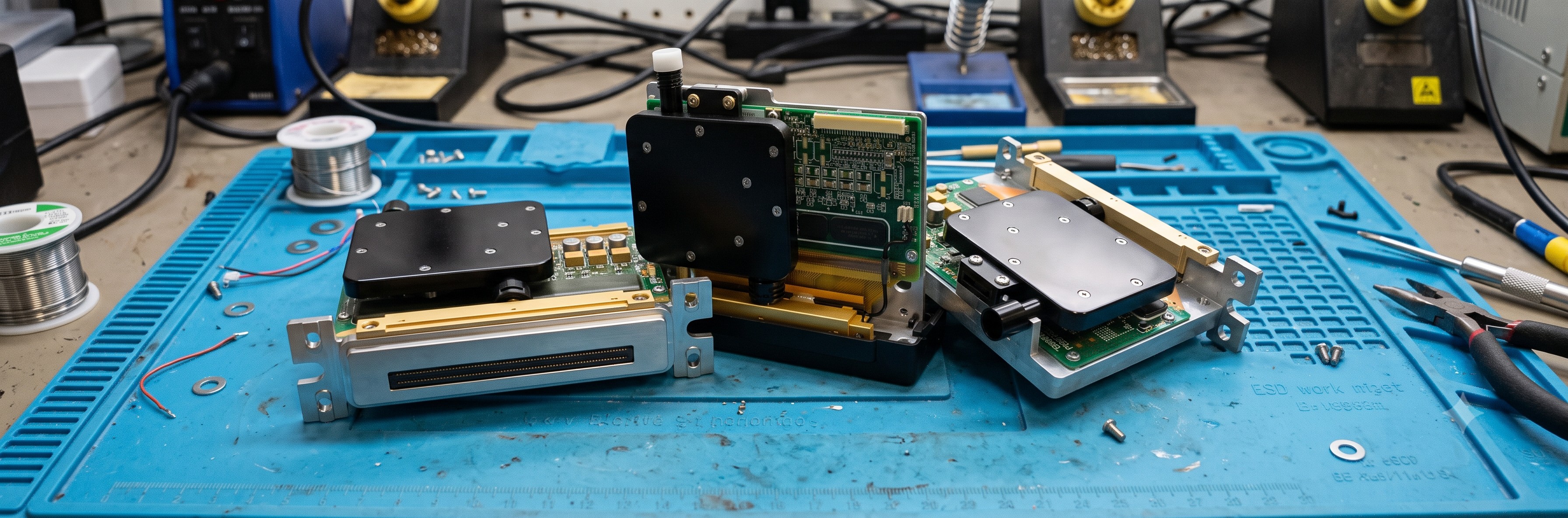
Seiko SPT-510 Printhead — the 42 pL solvent workhorse
Why solvent shops trust the SPT-510
The Seiko SPT-510 carries 510 nozzles and fires a heavy 42 pL drop. That big drop means strong colour density on star flex, backlit flex, and PVC banner media, with a nozzle geometry that tolerates dusty shop conditions well. Machines built on the SPT-510 are common across Indian flex markets.
- 510 nozzles with a 42 pL drop — dense, fast, weatherproof banner output
- Built for true solvent ink, the standard flex chemistry
- Shares the SPT platform layout with the SPT-508 — same family, different drop size
- Widely supported with dampers, cables, and adapter boards in India
Care points: like every SPT head, the 510 must never dry out. Purge solvent through the head at closing time, leave it capped moist, and run a nozzle test each morning. A dried SPT head usually means a dead SPT head.
Best for: flex printing machines running true solvent ink daily — banners, hoardings, and outdoor media.
Seiko SPT-508 and 508GS / 510GS Heads — for finer solvent detail
The finer-drop side of the SPT family
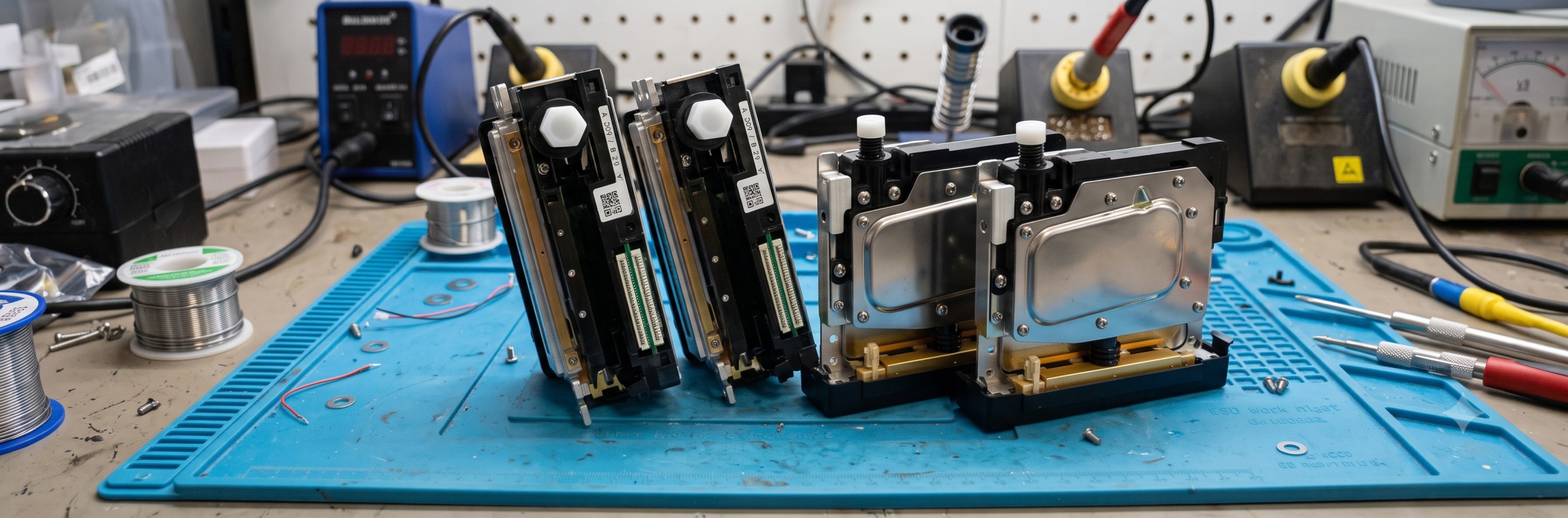
The SPT-508 uses the same platform as the 510 but fires a smaller 35 pL drop, and the GS versions — 508GS and 510GS — go further with a 12 pL drop. Smaller drops mean smoother gradients, cleaner small text, and better photographic work on solvent machines.
- SPT-508 (35 pL): balanced drop for general solvent printing
- SPT-508GS / 510GS (12 pL): fine detail, smooth skin tones and small text
- Same care rules and dampers family as the rest of the SPT range
- Choose by your machine spec — the board and voltage are tuned per version
Do not swap drop sizes on a whim: a machine tuned for a 42 pL 510 will not print correctly with a 12 pL GS head without voltage and profile changes. Match what the machine was built with.
Best for: solvent machines specified with fine-drop heads — retail graphics and photo banners.
Seiko SPT-1024 Printhead — for production solvent machines
The production upgrade
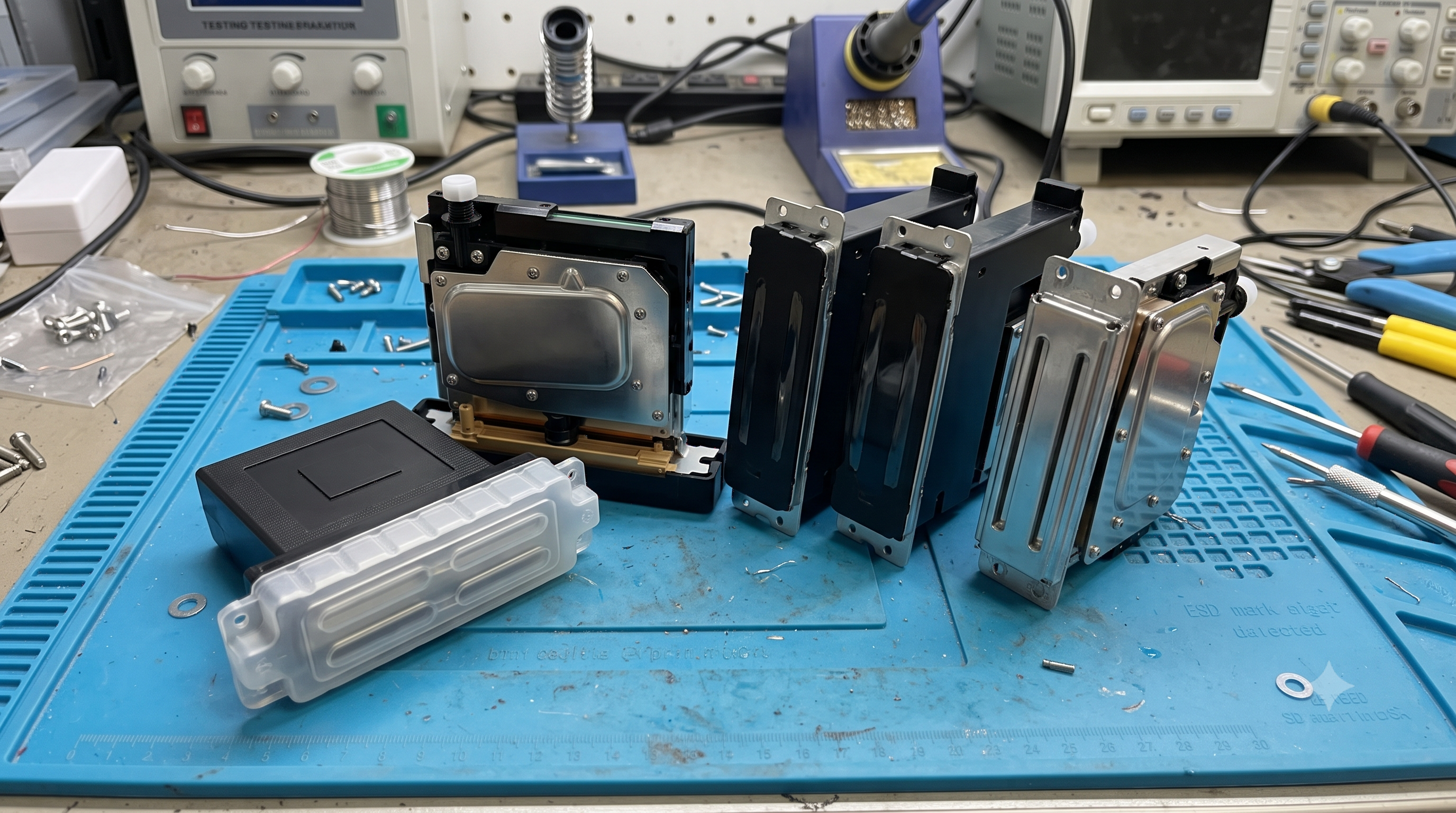
The Seiko SPT-1024 carries 1024 nozzles — double the SPT-510 — so production machines print faster with fewer heads. It comes in drop-size versions: 35 pL (M), 12 pL (L), and a high-viscosity 35 pL HG variant for machines tuned to it. The same purge-daily discipline applies.
- SPT-1024-M (35 pL): production solvent printing at high density
- SPT-1024-L (12 pL): production speed with fine-drop detail
- SPT-1024-HG (35 pL): for machines tuned to high-viscosity solvent ink
- Found in wide multi-head solvent production lines
Replacement note: in multi-head rows, heads are tuned together. A new SPT-1024 may need voltage and head ID setup to match the rest of the row — plan the swap with your technician.
Best for: production solvent lines and wide machines printing flex all day.
Seiko SPT-255 Printhead — for older solvent machines
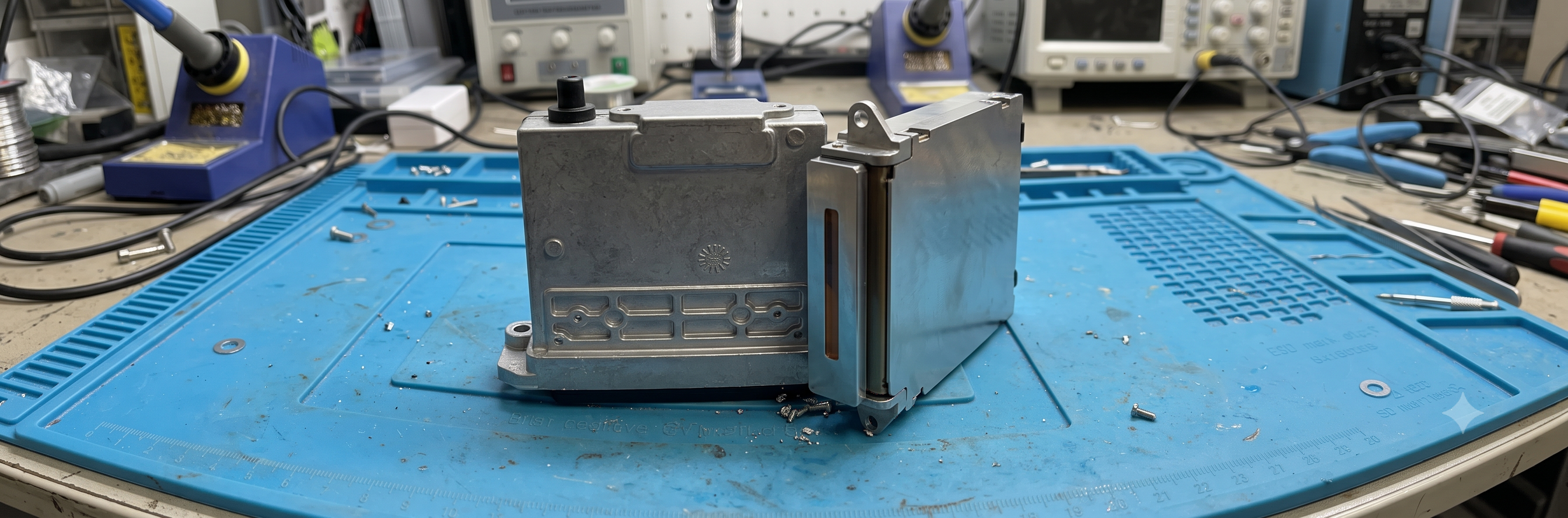
Keeping legacy machines earning
The Seiko SPT-255 is a 256-nozzle head with a 35 pL drop that powered an earlier generation of solvent machines. Thousands are still in service. Spares remain available, and replacing the head is usually far cheaper than replacing the whole machine.
- 256 nozzles with a 35 pL drop — the classic Seiko solvent layout
- Same solvent care rules: daily purge, moist capping, morning nozzle test
- Check the damper and cable condition whenever the head is replaced
- Economics: on its third or fourth head, compare the cost against a newer SPT-510 or SPT-1024 machine
Best for: legacy solvent machines that still earn daily and need an affordable head replacement.
All Seiko printheads for flex and solvent printing
These are the Seiko heads you will meet in Indian flex and solvent machines. Use this table to identify yours before ordering.
| Seiko head | Nozzles | Drop size | Common inks | Where you see it |
|---|---|---|---|---|
| SPT-510 | 510 | 42 pL | True solvent | Standard solvent and flex machines |
| SPT-508 | 508 | 35 pL | Solvent | Mid-range solvent machines |
| SPT-508GS / 510GS | 508 / 510 | 12 pL | Solvent | Fine-detail solvent machines |
| SPT-1024-M | 1024 | 35 pL | True solvent | Production solvent lines |
| SPT-1024-L | 1024 | 12 pL | Solvent | High-speed fine-detail production |
| SPT-1024-HG | 1024 | 35 pL | High-viscosity solvent | Machines tuned for HG ink |
| SPT-255 | 256 | 35 pL | Solvent | Legacy solvent machines |
Seiko printhead and ink compatibility
Seiko SPT heads are solvent heads by design, like Konica. The version and drop size are tuned by the machine maker — match them before you fill anything.
| Head version | True solvent | Mild / eco solvent | Water-based |
|---|---|---|---|
| SPT-510 (42 pL) | Yes | Mild only | No |
| SPT-508 / GS versions | Yes | Mild only | No |
| SPT-1024 (M / L) | Yes | Mild only | No |
| SPT-1024-HG | High-viscosity solvent | No | No |
| SPT-255 | Yes | Mild only | No |
Quick rules
- Seiko heads do not run DTF, DTG, or standard water-based inks — those belong to Epson heads.
- The HG version runs only high-viscosity solvent ink. Standard SPT heads do not take HG ink.
- Use matched solvent cleaning fluid and purge at day end — dried ink is the top Seiko head killer.
- Changing ink brands on the same head? Flush fully first and run a nozzle test before production.
Original vs compatible Seiko printheads
| Feature | Original Seiko head | Compatible / second-hand |
|---|---|---|
| Nozzle test out of the box | Clean, all nozzles firing | Varies — often weak channels |
| Head life | Full expected lifespan | Unknown hours already used |
| Voltage behaviour | Within machine's tuned range | Often needs voltage adjustment |
| Warranty | Supplier-backed replacement | Usually none |
| Price | Higher | Lower |
| Best for | Production machines earning daily | Backup, low-risk testing |
What to check before you buy
- Sealed Seiko packaging with intact serial and protective film
- A live nozzle test before payment — any honest supplier allows this
- The exact model and drop size — 510 vs 508, GS version, 1024-M/L/HG, or 255
- Matching dampers, cables, and adapter boards for your machine model
- Technician support for head ID and voltage setup after fitting
A practical rule: Seiko heads are frequently copied in the market. A production solvent machine should run original heads — one cloned head that drops nozzles mid-banner costs more in wasted flex than the saving.
How to choose and fit the right Seiko printhead
- Identify the exact head. Read the machine manual and head marking — SPT-510, SPT-508 or GS, SPT-1024 with M, L, or HG suffix, or SPT-255.
- Match the ink. True solvent for standard SPT heads, high-viscosity solvent only for HG. Never mix chemistry families.
- Buy the small parts too. Dampers, cables, and adapter boards cost little and decide whether the new head runs clean.
- Insist on a nozzle test. Fire a test pattern before paying and check every channel.
- Set up with a technician. Head ID and voltage adjustment after fitting keeps the new head in the machine's tuned range, especially in multi-head rows.
- Purge daily. Flush solvent through the head at closing time and leave it capped moist. A dried Seiko head is usually a dead Seiko head.
- Buy from a source that supports. Sealed originals, tested stock, and someone who answers setup questions matter more than the lowest price.