
Is a radium or retro cutting plotter right for you?
Radium sheet — also called retro reflective sheeting — is the glass-bead material used on vehicle number plates and safety signage. It is thicker than normal vinyl, so it needs a cutting plotter with a sharp 60° blade and higher cutting force. Any good plotter with enough force and the right settings cuts it; a dedicated radium or retro setup simply bundles the right blade, force, and number plate templates together.
| Your work | Right setup |
|---|---|
| Radium letters and numbers for number plates | Cutting plotter with 60° blade and plate templates |
| Reflective signage, safety and fleet markings | Wider plotter with high cutting force |
| Reflective plus normal vinyl stickers in one shop | One plotter, two blade and force presets |
| Printed reflective work with registration marks | Plotter with ARMS optical eye |
Number plates
Radium letters cut to plate templates.
Reflective signage
Safety boards, fleet and road markings.
One machine, two jobs
Swap presets for radium and normal vinyl.
What Is a Radium or Retro Cutting Plotter?
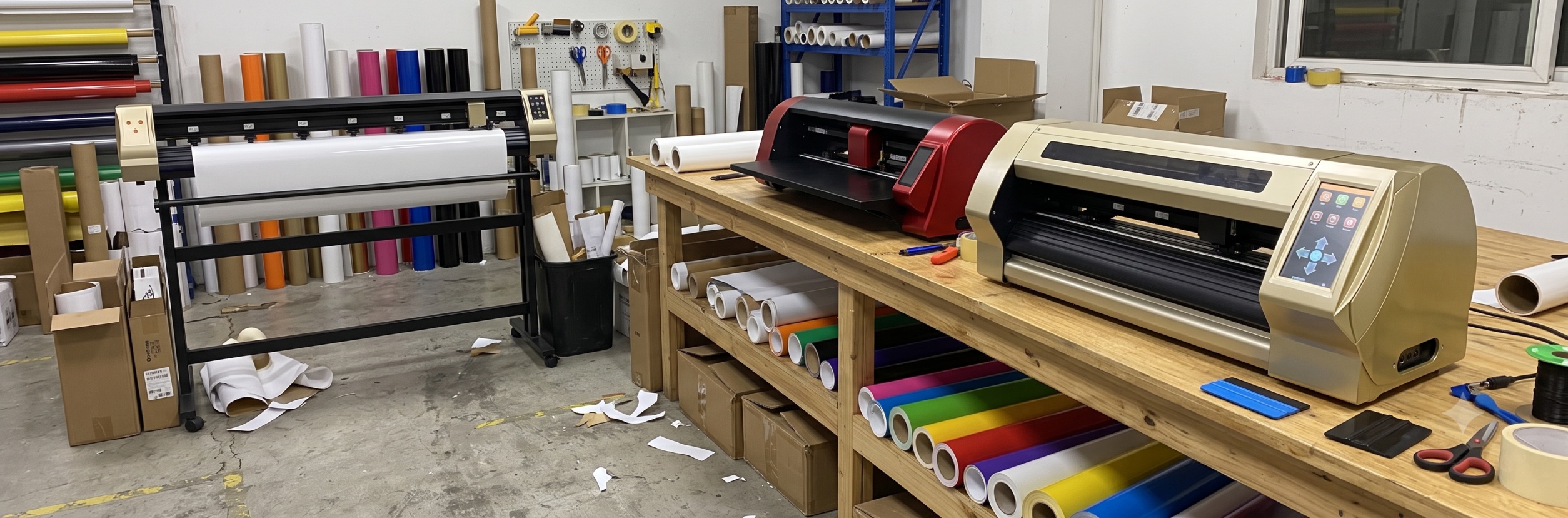
The material decides the machine
Radium or retro reflective sheet is a thick vinyl loaded with glass beads that bounce light back to its source. That is what makes number plates and safety signs shine under headlights. The same beads and backing make the sheet stiff and abrasive, so cutting it is harder on blades than cutting ordinary sticker vinyl.
- Thicker construction — needs a 60° blade and higher cutting force than normal vinyl
- Abrasive glass-bead surface dulls blades faster — keep spares in stock
- Cuts on the plotter like any vinyl: pinch rollers hold it, the blade follows the file
- Comes in white, yellow, and coloured reflective grades for different plate and sign uses
There is no separate "radium-only" technology — it is a standard cutting plotter specified correctly for this material: strong force, sharp steep blades, a healthy cutting strip, and templates for the shapes you sell.
Best for: number plate shops, signage makers, and sticker shops adding reflective work.
How to Cut Radium Sheet: Blades, Force and Settings
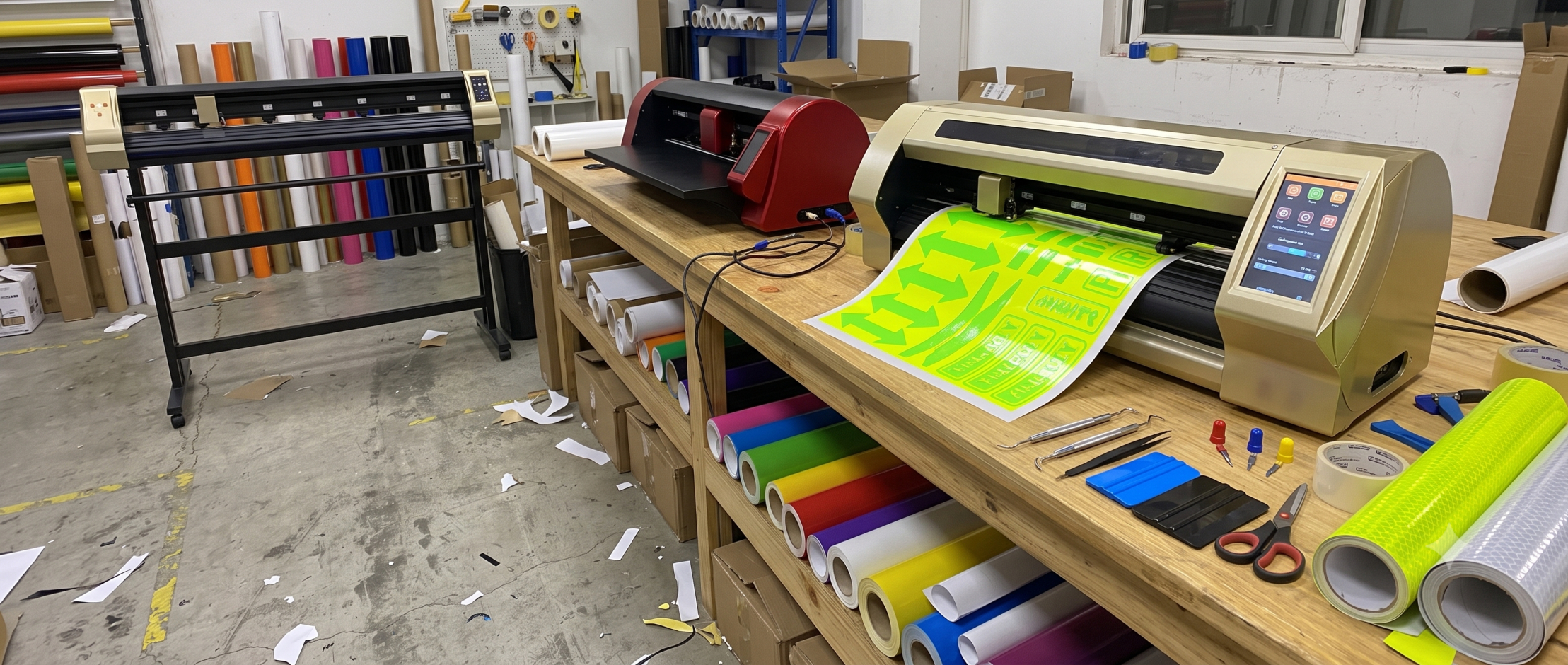
The three settings that matter
Radium cuts clean when blade, force, and speed match the sheet. Get one wrong and letters tear, peel badly, or cut through the liner.
- Blade: use a fresh 60° blade — the steep angle slices the thick sheet instead of pushing through it. Replace blades more often than you would on normal vinyl.
- Force: start around 300–400 gf on the test sheet and step up until the cut goes through the reflective layer but not the liner. Thicker engineering-grade sheet may need more.
- Speed: drop the speed below your normal vinyl setting. Slower travel gives the blade time to follow tight letter corners without snagging beads.
Check the cutting strip as well — a scored strip lets the blade cut through the backing and dulls it within a job. Fresh blade plus fresh strip solves most "radium not cutting properly" calls, exactly as it does on normal vinyl.
Weeding tip: cut a small test letter first, weed it, and check the edges under light before running the full plate.
Best for: consistent, clean radium letters — the settings, not the machine brand, make the difference.
Number Plates, Signage and Reflective Jobs
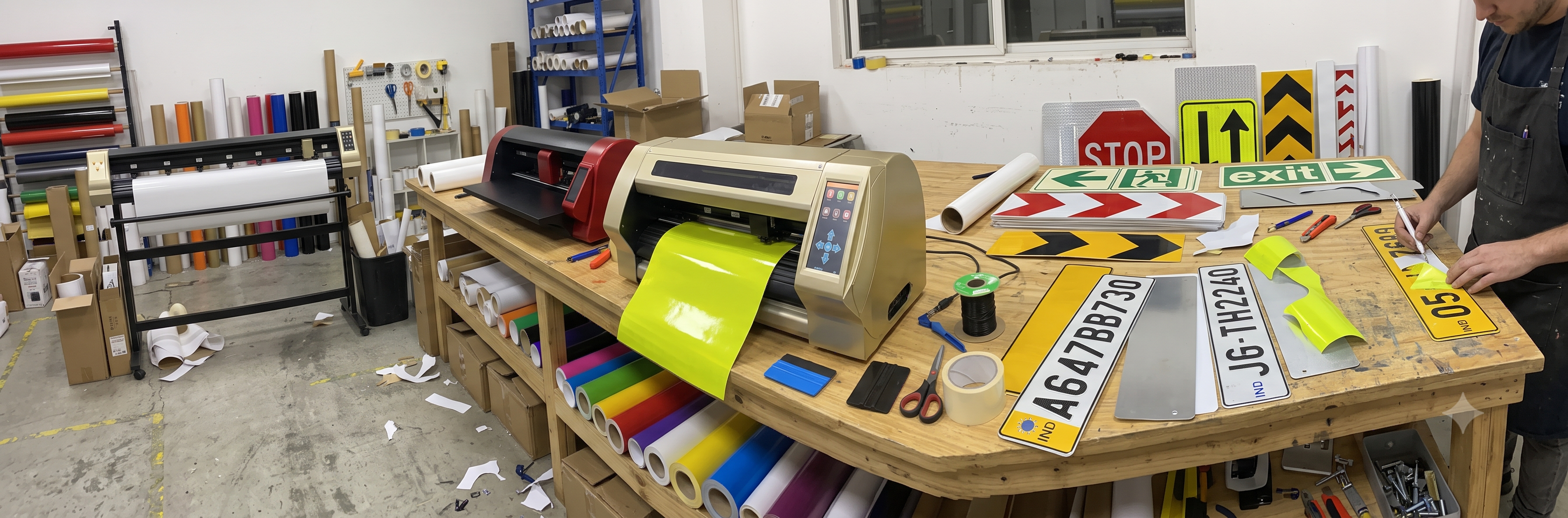
The daily radium workload
Radium plotters earn their keep on repeat letter work. Templates turn every order into a type-and-cut job.
- Number plate letters: radium characters cut to plate-size templates — two-wheeler and four-wheeler layouts are the daily volume
- Reflective signage: safety boards, hazard markings, and shop signs on reflective sheet
- Fleet and vehicle markings: reflective company names, route numbers, and door decals
- Safety and industrial labels: reflective equipment tags and floor markings
- Normal vinyl too: the same machine cuts stickers and HTV when you swap the preset
Templates and fonts: number plate work needs correct letter shapes and spacing. Most plotter software supports plate fonts and spacing templates — confirm this in the demo, because rebuilding letter layouts by hand kills the margin on every plate.
Compliance note: vehicle number plates follow state-level rules, and many regions use authorised plate systems. Check the regulations that apply to you before producing plates commercially.
Best for: plate makers, sign shops, and vehicle accessory businesses.
Specs that matter on a radium cutting plotter
Radium work stresses three machine areas: force, blade system, and software. Check these before comparing prices.
| Spec | Why it matters | What to check |
|---|---|---|
| Cutting force | Thick reflective sheet needs more push than vinyl | Enough headroom above the force that cuts your sheet cleanly |
| Blade system | 60° blades are essential for radium | Standard 2 mm holder that takes 45° and 60° blades |
| Cutting width | Sheet size and plate stock | 24 in suits two-wheeler plates; 28–34 in covers four-wheeler and signage |
| Software templates | Plate letters need correct shapes and spacing | Plate fonts or letter templates included in the bundle |
| ARMS optical eye | Only needed for printed reflective work | Optional — plain radium letters do not need contour cutting |
Quick rules
- Force headroom matters more than the maximum number — a machine at its limit tears edges and burns blades.
- Blade supply decides uptime: radium dulls blades faster, so price your spares along with the machine.
- Test cut your actual radium sheet at the demo — sheet thickness varies between brands and grades.
- Ask for a plate letter demo with your own template, not a showroom sticker.
Radium plotter vs laser vs hand cutting
| Feature | Cutting plotter | Laser cutting | Hand cutting |
|---|---|---|---|
| Edge quality on radium | Clean, repeatable | Good, but can scorch edges | Varies by operator |
| Speed on plate letters | Fast, template-driven | Fast | Slow |
| Machine cost | Low | High | Minimal |
| Blade and running cost | Blades and strips — low | Lens, tube, power — high | Blade knives — low |
| Safety and fumes | No fumes | Needs extraction and care | No fumes |
| Best for | Plate shops and signage volume | Specialised display work | Occasional one-offs |
The practical answer for almost every plate and signage shop: a cutting plotter. It cuts radium clean and fast at the lowest running cost, doubles as a normal vinyl cutter, and has no fumes or licensing headaches of laser systems.
Radium and retro cutting plotters available in India
Match the width to the largest plate or sign stock you run. Most shops need less machine than they think.
| Class | Cutting width | Typical radium work |
|---|---|---|
| Compact plotter | ~24 in | Two-wheeler plates, small signage letters, reflective labels |
| Mid plotter | ~28–34 in | Four-wheeler plate stock, safety boards, fleet markings |
| Wide plotter | ~44 in and up | Full-size reflective signage sheets and board production |
What to check before you buy
- Force headroom tested on your own radium sheet, not the supplier's offcut
- 60° blades and blade holders included, with local spare stock
- Plate fonts or letter templates in the software bundle
- Cutting strips and pinch rollers available locally — radium wears the strip faster
- ARMS eye only if printed reflective jobs are in your plan
- A demo that cuts a full plate layout end to end, weeded in front of you
A simple start: a 24 in plotter with strong force, two spare 60° blades, a spare strip, and plate templates covers most two-wheeler and four-wheeler plate work. Add width when signage sheets become regular.
How to choose and set up a radium cutting plotter
- Confirm the work. Number plates and reflective signage point to a plotter with force headroom and 60° blades. Normal stickers alone do not justify the radium setup.
- Match the width. Measure your plate and sign stock — the bed must take the full sheet with margin.
- Test on your sheet. Cut your own radium at the demo, weed a letter, and check the edges under light.
- Check the templates. Build one full plate layout in the demo software — fonts, spacing, and cut lines end to end.
- Lock the settings. Save blade depth, force, and speed presets for each radium grade you stock, and separate presets for normal vinyl.
- Stock the wear parts. 60° blades dull fastest on reflective sheet — keep at least two spares and a spare cutting strip.
- Know the rules. If you produce number plates commercially, check the plate regulations in your state before taking orders.