
Which DTF powder is right for your printing?
DTF powder is the hot melt adhesive that grips the printed film to the fabric. For t-shirts and apparel, a TPU-based hot melt powder is the standard choice. Fine mesh suits small text and detailed art, medium mesh is the everyday workhorse, and coarse mesh holds best on rough fabric and heavy coverage.
| Your DTF work | Best powder |
|---|---|
| Small text, detailed designs, smooth feel | Fine mesh TPU powder |
| Everyday t-shirts, hoodies, mixed designs | Medium mesh TPU powder |
| Heavy coverage, rough fabric, strong bond | Coarse mesh TPU powder |
Fine mesh powder
Sharp detail and the smoothest hand feel.
Medium mesh powder
The everyday balance for most shops.
Coarse mesh powder
Strongest bond for rough fabric and solids.
What Is DTF Powder and How Does It Work?
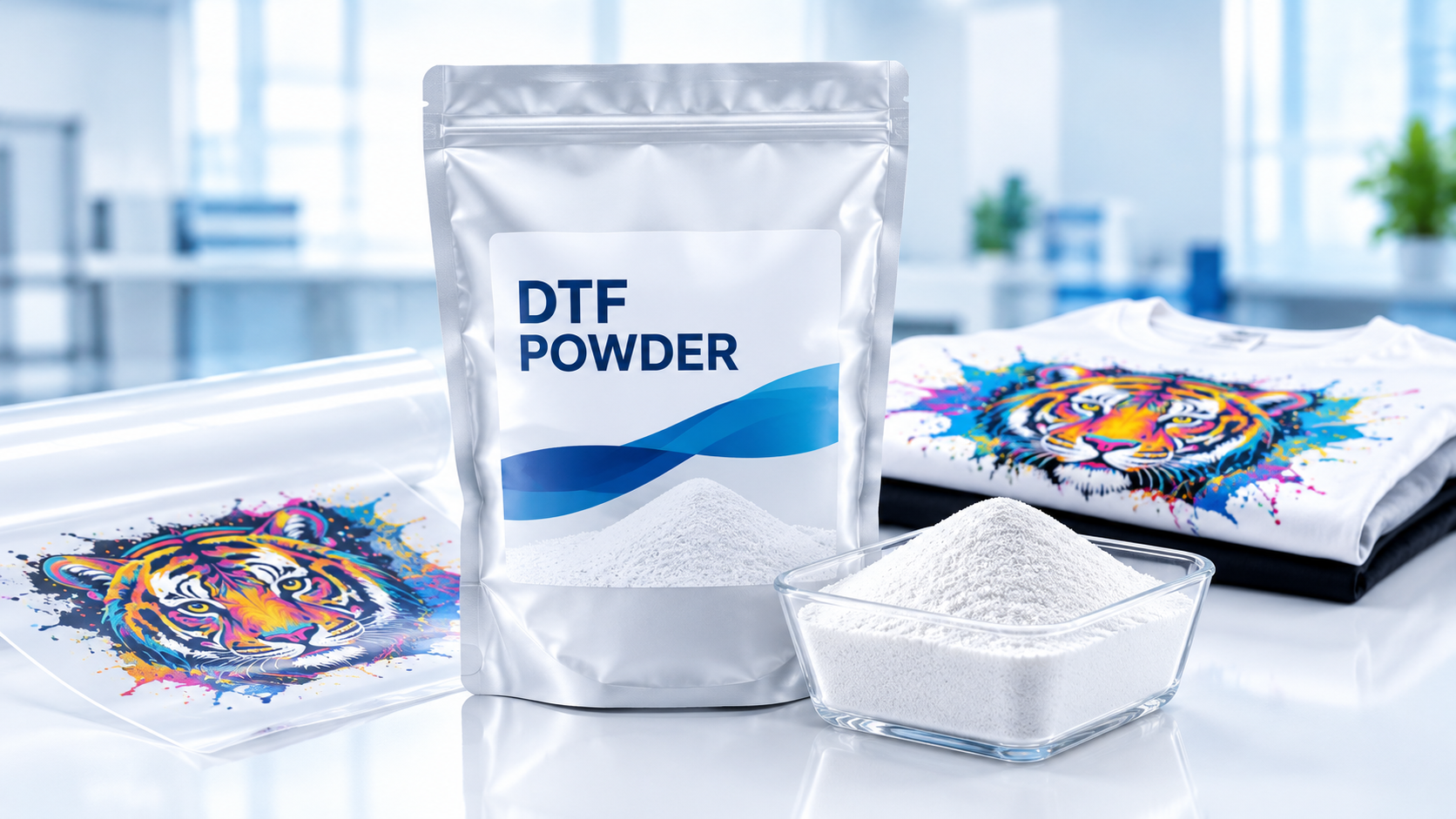
How the adhesive works
DTF powder is a thermoplastic adhesive — tiny white granules of TPU or a similar polymer. After the printer lays CMYK and white ink on PET film, the powder is sprinkled over the wet print. Only the printed area holds the powder. Heat melts it into the ink layer, and cooling locks it into a solid adhesive film. At the heat press, it melts a second time and grips the fabric fibres.
- Bonds the PET film print to cotton, polyester, blends, and leather
- Melts around 110–130°C, presses at 150–160°C
- White powder is the standard for all designs
- The powder grade decides wash durability and hand feel
The full chain matters: DTF ink, PET film, hot melt powder, and curing must all match. Good ink with the wrong powder, or the right powder with bad curing, will fail the wash test.
Best for: every DTF transfer — t-shirts, hoodies, caps, tote bags, and uniforms.
Types of DTF Powder: TPU vs TPA and Mesh Sizes
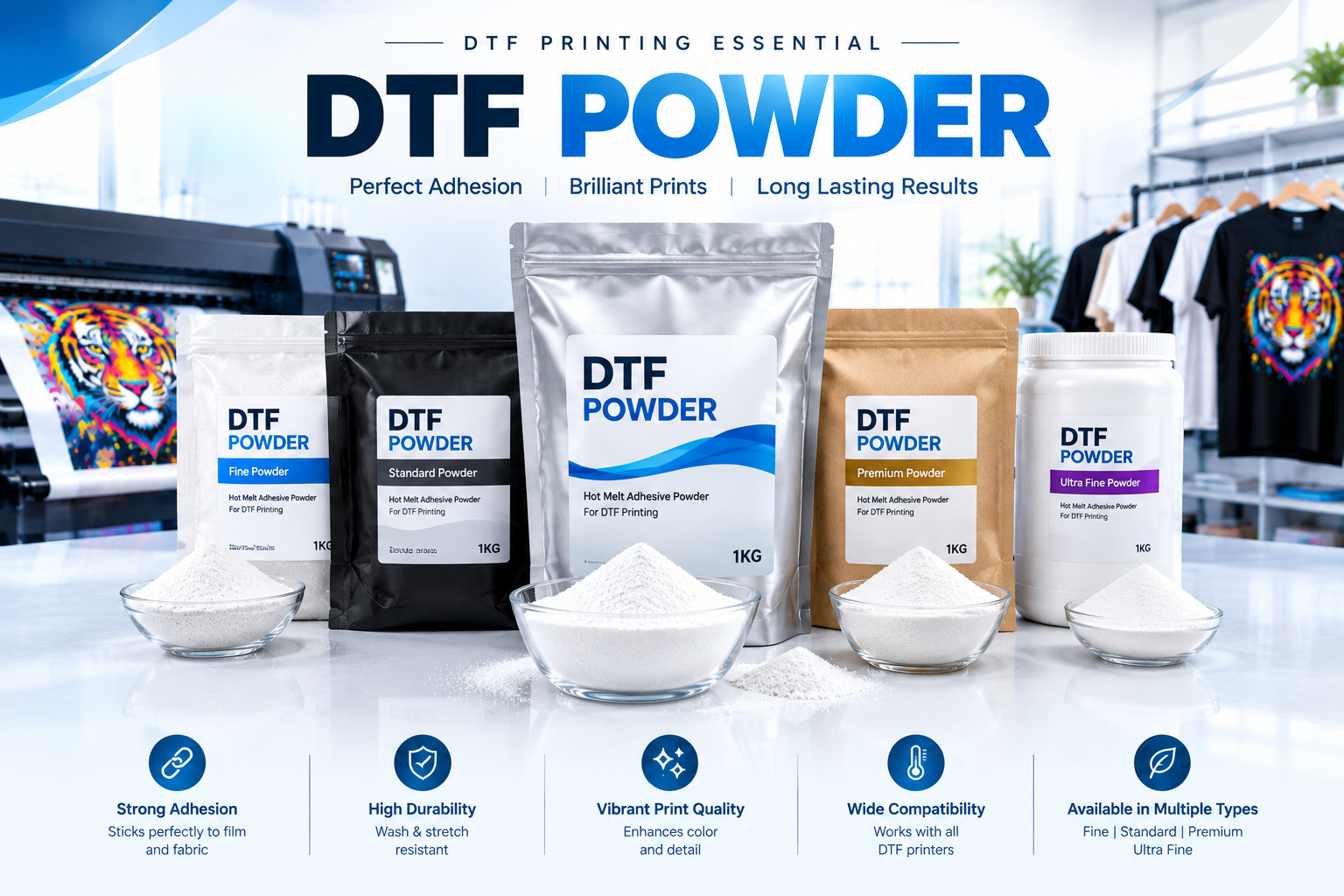
The two families
All DTF powders are hot melt adhesives. The chemistry decides the feel, and the mesh size decides the detail. Most apparel shops use one TPU powder and rarely need anything else.
- TPU powder (polyurethane): the standard choice. Soft hand, high stretch, and strong wash durability. Suits t-shirts, hoodies, and sportswear.
- TPA powder (polyamide): a harder finish with strong adhesion, used for specific films and industrial work.
- PES powder (polyester): a cost-effective option that works well on blends.
Mesh sizes
- Fine mesh (80–100 μm): sharp detail, thin and smooth layer, best for small text.
- Medium mesh (100–160 μm): the everyday balance of detail and bond strength.
- Coarse mesh (160–250 μm): heavy coverage and the strongest hold on rough fabric.
Keep grades separate. Mixed powders melt unevenly and cause bumpy surfaces. Never mix DTF powder with any other adhesive type.
Best for: one medium-mesh TPU powder covers most shops; add fine mesh when you sell detailed designs.
How to Melt and Cure DTF Powder the Right Way
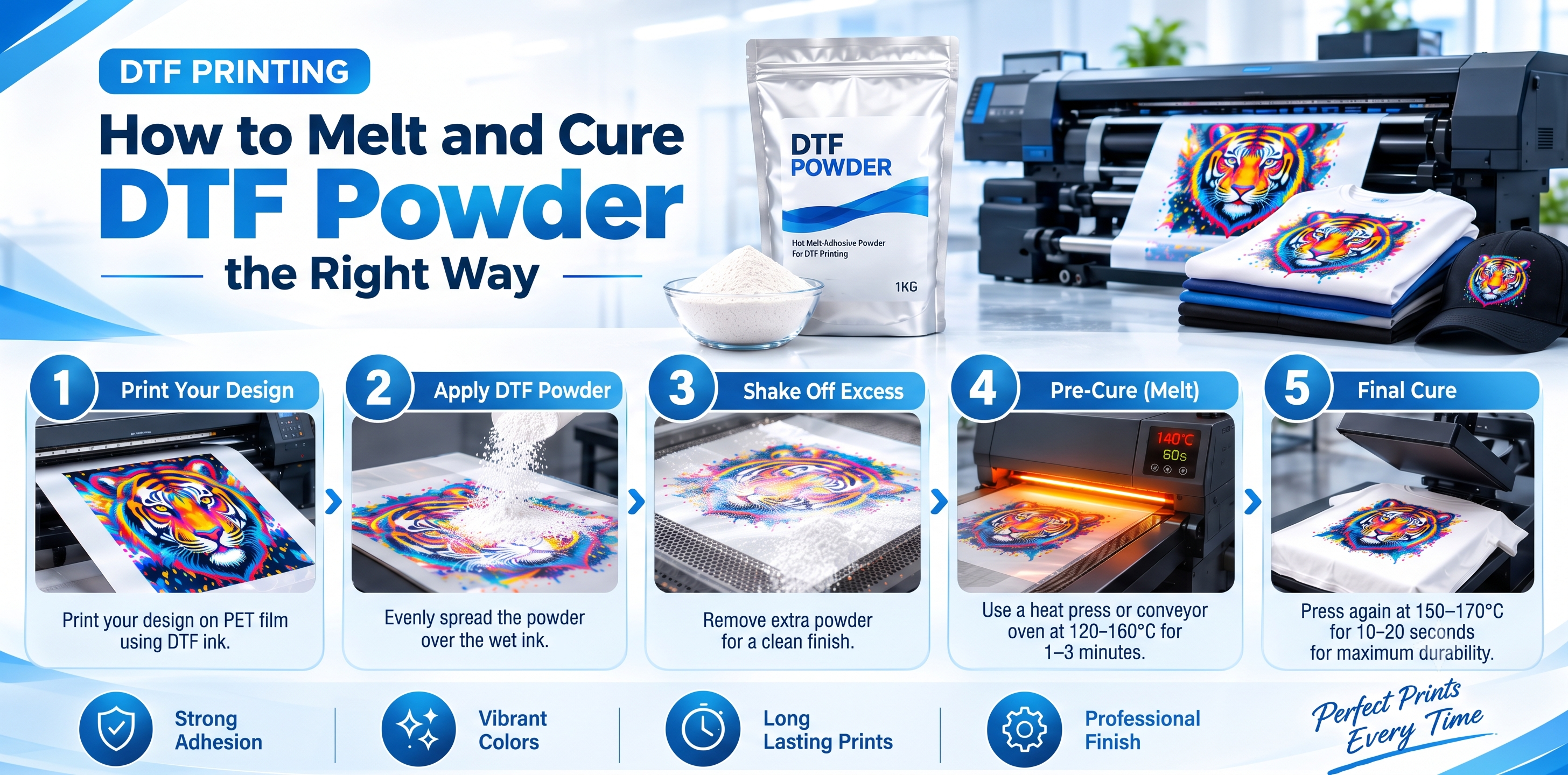
Three steps after printing
Melt, cure, press — each step has a temperature window, and each window decides whether the transfer survives 50 washes or peels in five.
- Melt: curing oven or heat press hover at 100–120°C for 2–5 minutes, until the granules turn translucent
- Cure: let the film cool fully and harden before storage or pressing
- Press: 150–160°C, 10–15 seconds, medium-firm pressure; peel cold or hot per your film type
Under-melted powder stays gritty and fails in the wash. Over-melted powder soaks into the ink, dulls the colour, and weakens the bond. Watch the granules turn from white matte to translucent gloss — that visual signal is more reliable than a timer alone.
Best for: consistent curing is what turns a good transfer into a 50-wash transfer.
Matching DTF powder with ink and film
DTF powder never works alone. Its melt point must suit your ink binder, your curing equipment, and your PET film. Check all three before buying in bulk.
| Your setup | What to match | Why |
|---|---|---|
| Water-based DTF ink (CMYK + white) | Powder with matched melt point | Binder and adhesive must bond as one layer |
| PET film, cold peel or hot peel | Powder amount and press settings | Film type decides peel timing and finish |
| Auto powder shaker | Free-flowing powder grade | Clumped powder blocks the hopper |
| Curing oven or press hover | Melt point of 110–130°C | Your equipment must reach full melt |
Quick rules
- Buy ink, powder, and film from the same supplier family when possible — it removes most bonding problems.
- Cold-peel film works with standard TPU powder; always check the film spec sheet.
- Changing DTF ink brands? Re-run a full wash test with your current powder before bulk printing.
- Auto shakers need free-flowing powder. Store opened packs sealed, or they absorb moisture and clump.
Best DTF powder brands available in India
You need one DTF powder that matches your ink and film, one steady supplier, and a wash test you have seen with your own eyes. Indian shops usually pick from three groups.
| Powder group | Best when | What you get |
|---|---|---|
| Machine-maker matched powder | You want zero risk on a new DTF setup | Matched melt point with ink and film |
| Indian DTF powder brands | Daily apparel volume at low cost | Good flow, kilo packs, easy local stock |
| Imported TPU grades | Production shops and fine detail work | Consistent mesh, strong wash durability |
What to check before you buy
- Melt point: 110–130°C suits standard curing ovens and press hover methods
- Flow: powder should pour free and even, never clumped
- Purity: no yellow grains, dust, or hard lumps in the pack
- Packing: sealed, moisture-proof bags with a batch date printed
- Wash test: press a sample and wash it 10 times before committing to kilos
A simple start: 1 kg of medium-mesh TPU powder from a supplier who also stocks your ink and film, with a batch date on the bag. Add fine mesh when detailed orders come in.
Fine vs medium vs coarse DTF powder
| Feature | Fine mesh | Medium mesh | Coarse mesh |
|---|---|---|---|
| Particle size | 80–100 μm | 100–160 μm | 160–250 μm |
| Detail and small text | Excellent | Good | Poor |
| Hand feel | Smoothest | Balanced | Thickest |
| Bond strength | Good | Strong | Strongest on rough fabric |
| Stretch fabrics | Very good | Good | Fair |
| Best job | Small text, detailed art | Everyday t-shirts | Heavy coverage, rough fabric |
How to choose and use DTF powder
- Match your designs. Small text and fine art need fine mesh. Mixed shops do well with medium mesh. Rough fabric and solids take coarse.
- Check your curing setup. Your oven or press hover must reach the powder melt point of 110–130°C.
- Ask for a wash test. Print, powder, cure, press on your own fabric, and wash it ten times before bulk purchase.
- Store it dry. Moisture clumps powder. Keep opened packs in a sealed container in a dry room.
- Apply it right. Sprinkle evenly while the ink is wet, then shake off all excess before melting.
- Watch the melt. Granules turn from white matte to translucent gloss. Under-melting fails washes; over-melting dulls colour.
- Check the supplier. Batch dates, sealed packing, and stock of matched ink and film matter more than the lowest price per kilo.